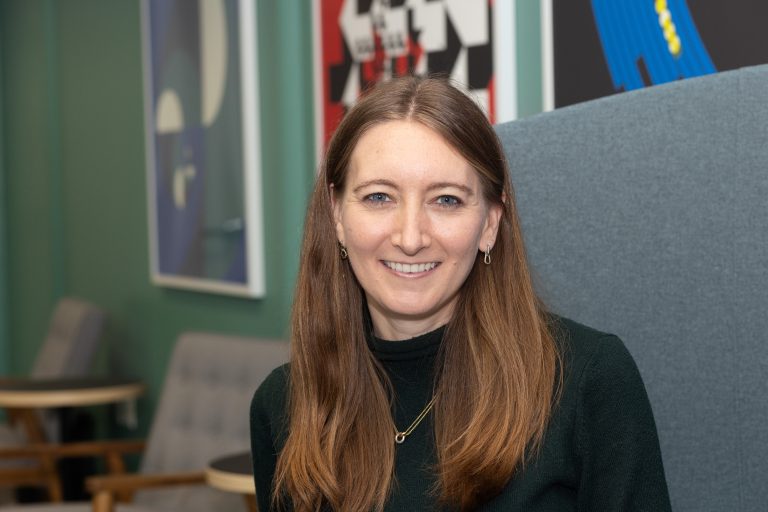
Cynthia Graber
While Cynthia Graber isn’t new to reporting on regenerative medicine, her interview with Tufts University biologist Michael Levin led to some unexpected stories. In research that recalls the toils of Dr. Frankenstein, Levin uses electricity to initiate regeneration of body parts in living organisms. In light of recent advances in DNA research, the field of bioelectricity has been largely abandoned. However, this hasn’t stopped Levin from incorporating his childhood passion for science into a lifelong pursuit of human regeneration. [Electric Shock, Graber's profile of Levin, appeared in Matter on December 18, 2012.]
Here, Graber tells TON guest contributor Melanie Bauer the story behind her story:
First off, what lead you to interview Michael Levin? And why did you decide to write a profile on Levin rather than a traditional feature?
I wrote a story three years ago for the Boston Globe Magazine about regenerative medicine in Boston. While doing that research I met a source, who is very well known in the field, who pointed me to Michael Levin at Tufts. As soon as I met with him I thought, “Wow, this is worth more than the two paragraphs that were going to end up in my story.”
I followed his work over the years and decided I needed to cover this, so I talked to different editors but they were skeptical. Levin had been covered here and there in short pieces, but I thought that a lot of the strings of his research weren’t getting pulled together along with the significance of it.
What was your goal with telling Levin’s story?
What made Levin’s story interesting as a narrative are two things: First, the thread of the science goes back to the 1700s, to the science that inspired the story of Frankenstein, which looms so large in our cultural history; and also that this line of research had mostly dropped off the map after the 1950s. But there was some really key research done in this field in the ’70s and ‘80s.
This type of research in bioelectricity is only now starting to gain more attention, and I found it very interesting. I like stories that are a little contrarian, and this story is a bit contrarian and says that there is a whole other line of research that had been forgotten that seems to be incredibly important. In this field of bioelectricity I’ve spoken to nearly, but not quite, everyone in the field to make sure Levin’s research is as key as I thought it was. They all say that he has taken it to an entirely new level; he’s doing really exciting things that nobody else would have thought to do or has been able to do until now. So it just reaffirmed to me that this was an important story, and the story of who he is is tied to that.
Why did you choose Matter as the outlet for this story?
In late 2011, early 2012, I started talking to some editors and I realized I had to just write the story. I had been talking to editors at Wired and a couple other places, but when I wrote the story, I convinced Levin to work with me on it even though I didn’t have a definite publisher. I spent much of the spring working on it, in addition to doing what I was doing to earn a living, and in the end I had 9,000 words. I wrote a story and it was very long. Then I was talking to a friend of mine who said there was a new long-form online science magazine called Matter, and she told me they were also taking freelance. So it just seemed like the obvious place to go. It was long and complicated but still narrative, and about basic research, and told a story, so this seemed like the right place, and I got in touch with them.
The way Matter works is that all their stories are at least 5,000 words. I will be their second story, but their first story was longer than 5,000 words as well. The benefit of e-publishing is that you’re not necessarily limited by words, but by the story.
What was your process for interviewing? The article is set up chronologically, from childhood to adulthood. Is this how the story unraveled as told by Levin, or did you piece it together post-hoc?
I actually started with questions about his childhood. I wanted to loosen him up a little bit, so the first thing I asked him was, “Tell me how you first got interested in this topic [bioelectricity].” He started telling me a story that I could tell was what he told everyone. There’s actually only one piece I’ve read about him that was a profile—that had been written in the Tufts magazine—and this was the same story he had told the Tufts magazine reporter. Obviously, I didn’t want the same story he’d told them. I knew there had to be more than that. So after questioning and questioning, I got some of those personal details about his childhood. It made me think, “Wow, this is even more interesting than I thought.”
Read more »