2023 Cohort
Beginning in May 2023, a cohort of 15 talented journalists worked for nine months with individual mentors to pursue a variety of goals, from getting their first bylines to building reporting and writing skills to expanding their professional networks.
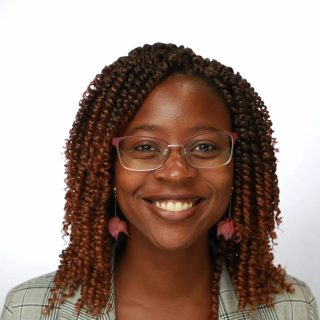
Jenae Barnes is a health and environment reporter at Capital B and a 2023 Wake Forest University Environmental and Epistemic Justice Fellow. Her passion for climate reporting was in part developed at the Earth Journalism Network, where she facilitated story grant projects for international newsrooms and supported the coverage of underreported climate stories across the globe. During the height of the pandemic, Jenae interviewed one of the first Black participants in a vaccination trial. In her first years as a journalist, Jenae worked as a global affairs intern at ABC News and has produced and written pieces featured on Good Morning America, Blavity, and Medium. You can find her on Twitter @J_theJourn. Her mentor in the program was Megha Satyanarayana.

Britny Cordera is a published poet, nonfiction writer, and emerging journalist who investigates the intersections between environment, climate change, and (pop) culture. Currently, she is an intern at St. Louis Public Radio. Britny’s work can be found in Grist’s Fix, The New Territory, Atmos, Next City, and Nexus Media News. She received her MFA from Southern Illinois University in Carbondale. When she is not reporting, or writing poetry, Britny teaches for the St. Louis Poetry Center and roller skates in her free time. Find her on Twitter @becordera. Her mentor in the program was Amy Mayer.

Jose Fermoso covers road safety, transportation, and public health for The Oaklandside. His previous work covering tech and culture has appeared in publications including The Guardian, The New York Times, and One Zero. Jose was born and raised in Oakland and is the host and creator of the El Progreso podcast, an Apple Podcasts-featured show featuring in-depth narrative stories and interviews about and from the perspective of the Latinx community. Find him on Twitter @fermoso. His mentor in the program was Lauren Gravitz.

Annika Hom is an inequality reporter for the award-winning nonprofit news site Mission Local. Annika got her first dose of health reporting covering COVID-19’s disproportionate effects on Latinos and Black San Franciscans. Since then, she’s covered housing, health, and features, through an inequality and social determinants of health lens. She’s also a three-year Report for America corps member, has been selected as a USC Annenberg health fellowship twice, and has had work appear in USA Today, Harvard Public Health Magazine, and more. She loves lounging in parks and piling up iced coffees in her room. Find her on Twitter @AnnikaHom. Her mentor in the program was Jyoti Madhusoodanan.

Shihab Jamal grew up in Sana’a, Yemen, where he currently lives with his family, and graduated from the mass communication college in Future University. Over time, he developed a deep interest in the earth sciences, natural history and climate sciences. In 2021, Shihab joined the National Association of Science Writers, where he gained knowledge that helped him start writing for Nature Careers. Now, Shihab is a freelance science writer with five years of experience. He believes that being a science writer is to deal with science not just through writing but as a lifestyle, driven by a sense of responsibility toward the planet and prosperity and committed to promoting diversity, equity and inclusion. In his free time, he likes to hike and play video games with his little brother. Find him on Twitter @ShihabJamal4. His mentor in the program was Priyanka Runwal.

Maya L. Kapoor is an award-winning journalist who covers climate change, biodiversity, and environmental justice. She has recent or forthcoming writing in Grist, Harper’s, High Country News, and Undark. She previously ran the journalism minor at North Carolina State University. Before that Maya oversaw coverage of the Southwestern U.S. for High Country News, where she also edited features, reportage, essays, interviews, and reviews. Maya has mentored early-career writers through The Open Notebook and the AAAS Mass Media Fellowship. She is currently on the steering committee of The Uproot Project and was previously on the board of the Society of Environmental Journalists. Learn more at mayalkapoor.com. Find her on Twitter @kapoor_ml. Her mentor in the program was Erika Hayasaki.

Karen Kwon is the associate editor of Optics & Photonics News and a freelance journalist. She holds a master’s degree in journalism from the Science, Health & Environmental Reporting Program at New York University and a Ph.D. in chemistry from Columbia University. She was also a 2020 AAAS Mass Media Fellow at Scientific American. Her words have appeared in Scientific American, Slate, Inside Science, IEEE Spectrum, and more. Originally from Seoul, South Korea, she now lives in Maryland, just outside of Washington, DC, with her drummer husband and a cat named Mailbox. Find her on Twitter @ykarenkwon. Her mentor in the program was Lauren Young.

Koby Levin is a science reporter for Outlier Media in Detroit, where he reports science stories within Outlier’s primary beats of housing, utilities and transportation — helping Detroiters connect to the wonder and joy that comes from understanding the city around them. Koby spent the last five years covering education for Chalkbeat Detroit. He previously worked for the Joplin Globe and the New England Center for Investigative Reporting. He is a graduate of Swarthmore College. Find him on Twitter @levin_koby. His mentor in the program was Ashley Yeager.

Andrew Meissen is a New York City-based freelance science writer. Before becoming a journalist, he worked in neuroscience labs studying creativity and consciousness at Northwestern University and New York University. His work has appeared in publications such as BrainFacts.org, Photonics Focus, and Drug Discovery News. Find him on Twitter @AndrewMeissen. His mentor in the program was Siri Carpenter.

Sono Motoyama is the science writer, focusing on public health, for the Memphis website MLK50. New to Memphis—and to science writing—she lived in France for 17 years, writing freelance articles for such publications as The Verge, The Independent, Eater, The Globe and Mail, and Atlas Obscura, among others. Previously, she was a features writer and editor at the Philadelphia Daily News, as well as editor-in-chief of Baltimore City Paper. Find her on Twitter @SonoMotoyama. Her mentor in the program was Nicholas St. Fleur.

María de los Ángeles Orfila is a Uruguayan journalist with more than 18 years of experience in journalism. She currently works as a journalist for the national newspaper El País. She has been responsible for editing and coordinating the Vivir section since June 2019 and Revista Domingo since December 2019. This includes the topics of science and technology, environment, health, and trends. In 2007 she received a scholarship to participate in the 4th Jack F. Ealy Workshop on Scientific Journalism at the University of San Diego – California; and in 2013 she received a scholarship to participate in the Smart Cities course of the International Center for Journalists and the Inter-American Development Bank. In 2012 she won the Siemens Latin American Journalism Award for the article “Energy Efficiency Is Still a Dream for Montevideo.” Find her on Twitter @orfilamaria. Her mentor in the program was Lindzi Wessel.

Roxanne Scott is a journalist in Queens, New York. Prior to returning to New York, she was a reporter at public radio stations in Atlanta and Louisville, Kentucky. During her seven years in newsrooms, she’s covered a variety of topics including how climate change affects residents of color in Queens, disparities in gifted and talented enrollment in Kentucky, and the spread of COVID in ICE detention centers in Georgia. Roxanne is a 2022 Center for Health Journalism Data Fellow. In 2018, she was awarded a travel grant from the Pulitzer Center to report on food and global health in Nigeria. In 2015, she was an International Women’s and Media Foundation fellow where she got to report in the Democratic Republic of Congo. Roxanne likes using public records and data to report local stories. She is a graduate of the CUNY School of Journalism. Find her on Twitter @WhosWorld. Her mentor in the program was Czerne Reid.

Helina Selemon is a health and science journalist for The Blacklight, an investigative unit for the New York Amsterdam News where she reports on COVID-19, climate change, and public health responses to gun violence. She previously worked in audience development and engagement for the health & science team at The Associated Press. Helina is also an experienced news researcher and trainer, having worked with the Ida B. Wells Society, the University of California, Berkeley, and the Craig Newmark Graduate School of Journalism at CUNY. As a freelancer, Helina contributed to reporting or fact-checking for health and science publications such as Popular Science, Spectrum, The Trace, GastroEndo News, and the WBAI (New York) show Healthstyles. Find her on Twitter @heyhelina. Her mentor in the program was Katharine Gammon.

Syris Valentine is a Seattle-based freelance writer who focuses on climate change and climate justice. Their work has appeared in Grist, YES! Magazine, Daily Dot, The Urbanist, and the South Seattle Emerald. With a deep passion for writing and literature, they recently launched Everyday Writer as an online resource to help beginning creative writers to own their stories and make their words work. When they’re not writing, you can find Syris kicking around a soccer ball, wandering the stacks of a nearby library or bookstore, or having hot debates about climate action with friends. Find them on Twitter @ShaperSyris. Their mentor in the program was Katarina Zimmer.

Ananya is a freelance science writer, journalist, and translator with an extensive research background in robotics. She covers all things algorithms, robots, oceans, urban issues, and the people involved in these fields. Since 2018, she has also worked with the ongoing podcast Talking Machines, which traces the developments in and social impacts of machine learning and AI. Ananya translates fiction and nonfiction between English and Kannada. She divides her time between Mangalore and Bangalore, and enjoys learning the names of trees, trying new snacks, and solving puzzles. Find her on Twitter @punarpuli. Her mentor in the program was Kamala Thiagarajan.
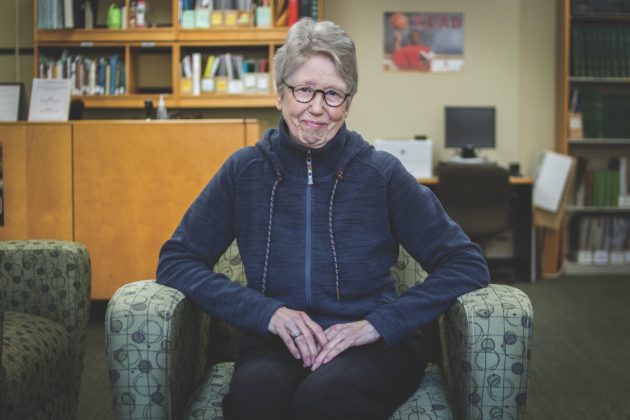
About Sharon Dunwoody