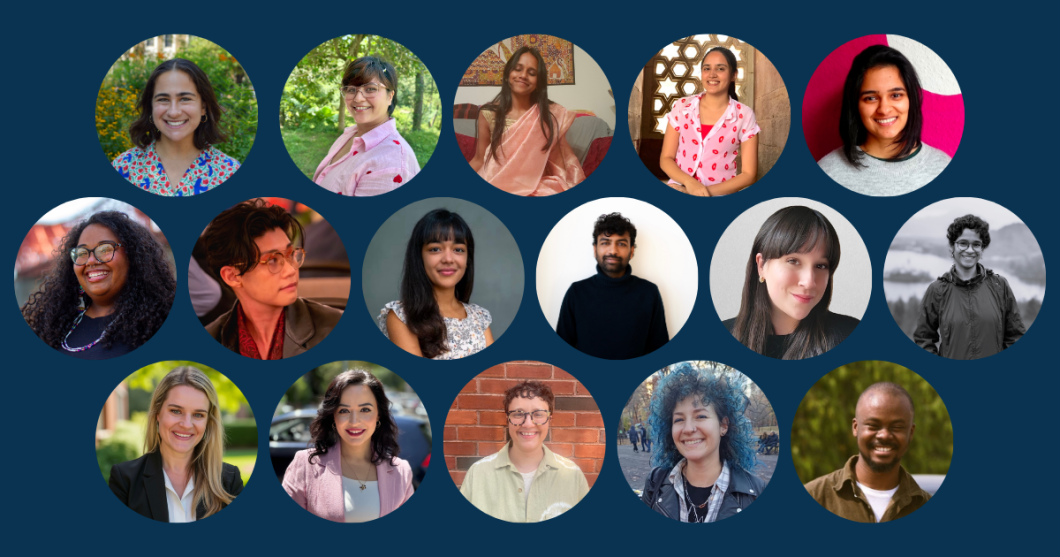
The Open Notebook is pleased to welcome 16 new participants to the Sharon Dunwoody Science Journalism Mentoring Program for the Fall 2025 session. Meet the current cohort:

Lyric Aquino is an award-winning journalist with a passion for writing about all things relating to science, the environment and Indian Country. Originally from Ohio, she is a proud member of Ohkay Owingeh Pueblo with ancestry from Isleta Pueblo and the Jicarilla Apache Nation. She earned two bachelor’s degrees from Kent State University in anthropology and journalism and holds a master’s degree in science, health and environmental journalism from New York University. One of her passions is reporting on the intersection of traditional ecological knowledge and Western science. Her reporting has appeared in outlets such as Grist, High Country News, Popular Science, and Smithsonian Magazine. She is currently based in Portland as a Report for America Corps member covering Indigenous Affairs at Underscore Native News. In her spare time, she can be found fawning over reptiles, geeking out over Lord of the Rings, playing board games and exploring nature. Find her on Bluesky and LinkedIn.
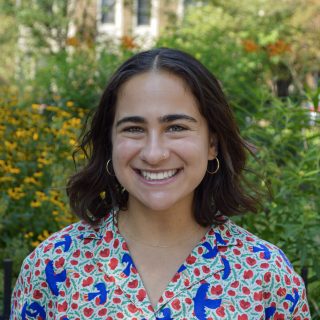
Nina B. Elkadi is an investigative reporter for Sentient. Her work explores corporate influence within the agricultural industry, the environmental impacts of factory farming, and how negligence impacts consumers and workers. Her work also appears in National Geographic, Inside Climate News, Civil Eats, High Country News, Ambrook Research, JSTOR Daily, Barn Raiser, and more. She splits her time between Washington, DC and her hometown of Iowa City. Find her on Bluesky and LinkedIn.
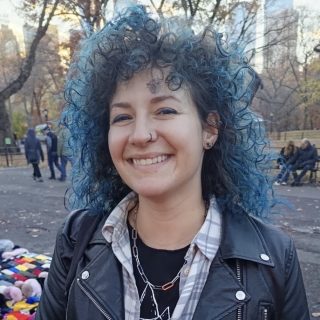
Olivia Ferrari is a New York City-based freelance journalist with a background in research and science communication. Olivia has lived and worked in the U.K., Costa Rica, Panama, and Colombia. Her writing focuses on wildlife, environmental justice, climate change, and social science. Find her on Bluesky.

Allison Johnson is an experienced communications professional and science writer whose career bridges public service, public health, and journalism. With over a decade in strategic communications, she has led campaigns and policy work for federal agencies including the Department of Veterans Affairs, Homeland Security, and the National Institutes of Health, specializing in translating complex science and policy into accessible narratives. She holds a Master of Public and International Affairs from Virginia Tech, where she researched U.S. foreign policy on HIV/AIDS in Sub-Saharan Africa, and a bachelor’s degree from the University of Utah in journalism, economics, and international studies. Her bylines appear in outlets such as Utah Business Magazine, The Salt Lake Tribune, and Deseret News. Find her on LinkedIn.
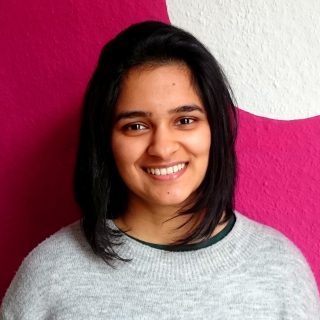
Nehal Johri is a journalist and news anchor at Deutsche Welle, Germany’s international public broadcaster. She covers global news and current affairs for a variety of TV and digital formats and is always looking for a great science story. Before journalism, Nehal worked as a neuroscience researcher at the German Primate Center and India’s National Centre for Biological Sciences. She holds a Master’s in Neurosciences from the International Max Planck Research School in Göttingen. Find her on LinkedIn.
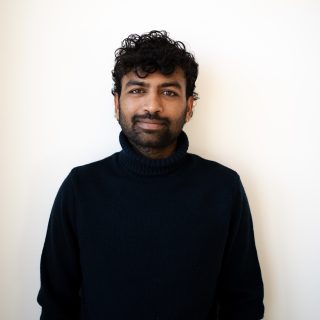
Aniket Narawad is a data journalist based in Berlin, currently reporting on sustainability issues at the Financial Times. Prior to this, he was an Algorithmic Accountability Reporting Fellow, where he investigated the environmental impact of data centers in Germany. He also served as an Indigenous Reporting Fellow with the Earth Journalism Network. Aniket began his journalism journey in Brussels with internships at Politico Europe and MLex Market Insight. As a freelancer, his reporting has been published by Al Jazeera, the German newswire DPA, Thomson Reuters Context, Clean Energy Wire, and other international outlets. He holds an engineering degree from the Indian Institute of Technology Bombay and a Master of Public Policy from the Hertie School of Governance in Berlin. Before transitioning to journalism, he worked as a data analyst in India’s public policy sector. Find him on Bluesky and LinkedIn.
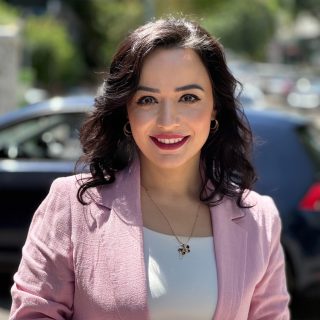
Esra Öz is a science, health, and technology journalist with nearly 17 years of experience. She currently works as an editor at TV100 and has previously contributed for Science magazine, New Scientist, CNN Türk, The Independent Turkish, Inside Turkey, Euronews Turkish, Journo, and Medikal News. Esra holds degrees in Biology from Eskişehir Osmangazi University and Radio & TV Programming from Anadolu University. She earned her master’s degree in Journalism from Ankara University, where her thesis focused on science communication. She was selected as a fellow journalist from Türkiye of both the Global Investigative Journalism Conference (2023) and the Science Journalism Forum (2023), and has won 10 national journalism awards. Esra is also the author of three books and a TEDx speaker on health literacy. She runs a science communication YouTube channel called “Science Talks with Esra Öz”, where she interviews researchers and explores scientific breakthroughs for broader audiences. Follow her on Bluesky and LinkedIn.
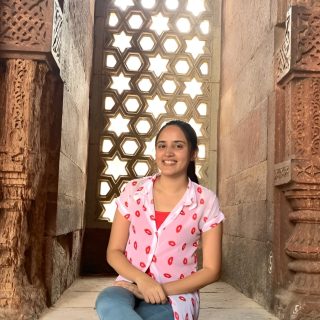
Soujanya Padikkal is a Life Science postgraduate who transitioned into writing, exploring a wide range of content, from book reviews and blogs to curriculum development and science journalism. She is passionate about making science fun, engaging, and relatable through writing, course design, or other creative formats. A storyteller at heart, she seeks to bring research to life through compelling narratives to make science understandable and accessible to diverse audiences. When not immersed in writing or research, she enjoys reading fiction and listening to music. Find her on Instagram and LinkedIn.
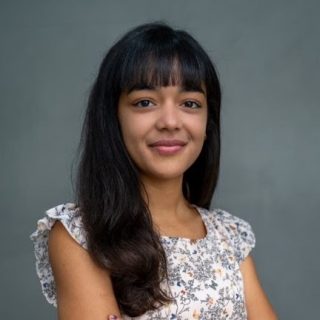
Ester Pinheiro is a Brazilian independent journalist with an MA in gender studies. She is the founder and host of Feminismos del Sur, a multilingual podcast that amplifies decolonial, feminist, and climate justice voices from the Global South. Ester works across four languages: Portuguese, Spanish, English, and French; and has contributed to both UN agencies and international NGOs on storytelling. Her reporting focuses on the intersections of science, gender, climate change, migration, health, and social justice, and has been featured in national and global outlets. Ester’s work has been recognized by institutions such as the Pulitzer Center, Inter-American Court of Human Rights, Internews’ Earth Journalism Network, Climate Tracker, UNAOC’s Young Peacebuilder Program, the Heinrich Böll Stiftung, and the Google News Initiative, among others. Find her on Bluesky and LinkedIn.
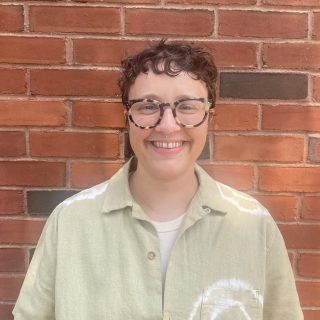
Bec Roldan is an independent health and science journalist with words in Chemical and Engineering News, Science, NPR, and more. They were a 2023 AAAS Mass Media Fellow at NPR and have a PhD in chemistry from the University of Michigan. They are based in Brooklyn, New York. Find them on Bluesky and LinkedIn.
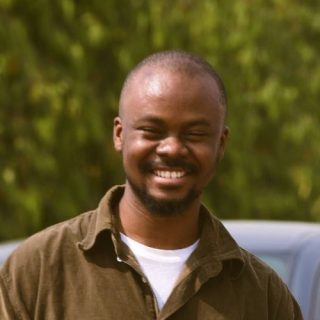
As an editor at The Habibat Project, Amir Sadiq contributes to the editorial strategy on environmental sustainability, climate change, and biodiversity conservation, drawing on his background in reporting, editing, and teaching these topics to African audiences. His work has been featured in outlets like Atlas Obscura, Offrange, and The Open Notebook, and he contributes to Daily Trust, one of Nigeria’s leading dailies. Amir has footprints in social impact, focusing on communication and partnerships for rural communities and volunteerism for local nonprofits working in conservation. He is based in Abuja, Nigeria. Outside of work, he enjoys TV shows, football (soccer), and travel. Find him on LinkedIn.

Sahana Sitaraman is a science journalist based in Lausanne, Switzerland. In 2022, she earned a PhD in neuroscience from the National Centre for Biological Sciences, India, studying how neurons develop their stereotypical tree-like shapes. She is currently an assistant editor at The Scientist, where she writes stories that bring the wonders and oddities of science to life. In a parallel world, Sahana is a singer and hiker. Find her on Bluesky and LinkedIn.
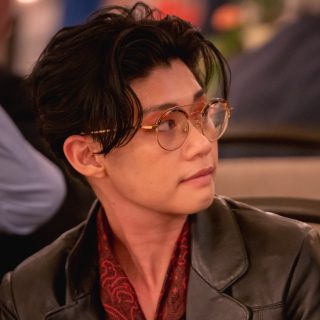
Fayth Tan is a science writer and editor who writes about science in the social zeitgeist, both past and present. Their writing has appeared in Nature, Electric Literature, Prism, The Xylom, and other publications. They earned a PhD in biology at Caltech, and won the NAS Schmidt Award for Science Communication in 2022. They live in Pasadena, California with their spouse, their cats Rya and Anri, and a hodgepodge succulent garden. Find them on Bluesky and LinkedIn.
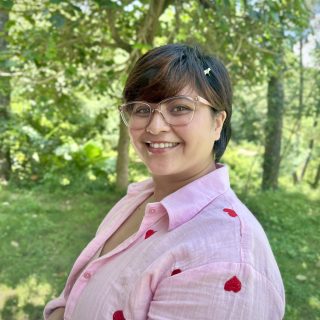
Swati Thapa is an independent journalist based in Uttarakhand, India, and has been working as a reporter since 2021. Her work encompasses in-depth coverage of critical topics including gender, climate change, environment, and rural life in India. She completed her undergraduate degree in journalism and mass communication. She has earned many fellowships throughout her years as a reporter and was a part of the Y. Eva Tan Conservation Reporting Fellowship with Mongabay. These transformative experiences deepened her understanding of the pervasive challenges surrounding gender dynamics and provided her with the lens to understand the intersection of different social identities and issues. As a resident of Uttarakhand, a state in the Indian Himalayan Region, she aims to bring attention to the impact of climate change on the daily lives of people in the region. In her free time, she enjoys nature walks. Find her on LinkedIn.
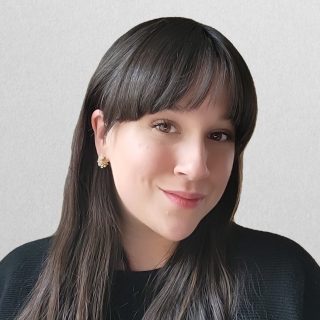
Gretchen Uhrinek lives for nature, stories, and stories about nature. She holds a BA in creative writing from the University of Pittsburgh and an MA in biology from Miami University. A two-time Chautauqua Writers’ Festival Fellow, Gretchen has worked as a freelance writer, a copyeditor, and the editor for two engineering society magazines. Her writing has been featured in Red Canary Magazine, Northern Woodlands Magazine, Animal Wellness Magazine, and elsewhere. She currently resides in the woods north of Pittsburgh, Pennsylvania. Find her on LinkedIn.

Shivali Verma is a neuroscience researcher and aspiring science journalist, driven by a desire to make complex scientific ideas more accessible and engaging. She is an incoming PhD student at the Sussex Neuroscience 4-Year Program and holds a master’s in cognitive neuroscience from University College London, Sorbonne University, and the École normale supérieure. With a background in biology and media studies, Shivali became increasingly drawn to the power of storytelling in science—especially around topics like language, consciousness, and the brain’s interaction with art and environment. Her experience writing for the Neuroverse Podcast blog and for neurotechnology startups sparked a deeper interest in science communication as both a craft and a responsibility. She sees science journalism as a way to bridge research and society, and is excited to build the skills, perspective, and community to pursue that path. Find her on LinkedIn.
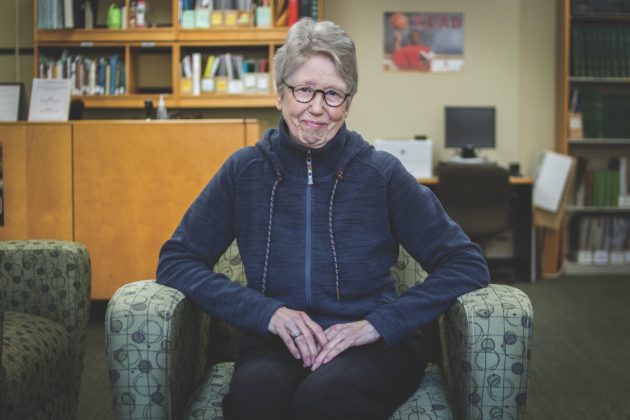
About Sharon Dunwoody