When Hannah Seo started freelancing in 2021, fresh out of the science journalism master’s program at New York University, she was eager to pitch as many publications as possible. “I was hungry and curious about bylines in different places,” she says, “just to see what I liked best and what was best suited for me.”
After interning with Popular Science, she secured an anchor gig writing short news stories for the outlet about three times per week. That offered her some financial stability while she connected with new clients and pitched stories on health, social science, climate change, and other topics, landing bylines in outlets like The Guardian and The New York Times. Knowing her PopSci gig might not be permanent, Seo reached out to find out how other freelancers built stability into their careers. Contracts like she had with PopSci aren’t common, she learned, and many freelance journalists lean on writing-adjacent work, even outside the field of journalism, to support their passion for reporting and writing. Hoping to make her own career sustainable for the long haul, Seo set out to diversify her mix as well.
There are plenty of reasons for anyone in Seo’s shoes to do so. Freelance rates have stagnated—many publications still offer rates of $1 per word or less—and effective hourly rates further depend on your writing pace, the length and rigor of the editing process, and publication delays. Full reliance on creative work increases the risk of burnout. And freelance writing pay is unpredictable, sometimes coming weeks, months, or even years after a story is assigned, making it hard to keep up with regular bills and expenses.
Mixing freelance writing with recurring or contract work can temper those troubles. Many writers seek hourly fact-checking and editing gigs to add financial stability and variety. For Seo, a part-time editing gig at Environmental Health News, where she had previously been an intern, gave her a reliable monthly paycheck. Via social media, she connected with authors looking for fact-checkers for books in fields she had covered as a journalist. Other writers find extra support through institutional communications, social media management, photography, translating, teaching, sensitivity reading, public speaking, and more.
Even early-career journalists may already have many of the skills necessary for these types of work, or they may be able to develop them in their first few years on the job. The pathways to turning those skills into paid contracts can be less well-defined than pitching a news story. But with patience and persistence, it’s possible to build a sustainable project mix that also offers fulfillment and even joy. “I’ve learned that I work best when I have a diversity [of tasks] throughout the week,” Seo says. “If I have a week where I’m writing for five days, that is really taxing for me. But if I have maybe two, three days of writing and then two days of something else … that is so much easier to do.”
Developing and Leveraging Skills
When diversifying your work, start from your arsenal of existing expertise to identify possible avenues of interest. What are you good at, or what do you know a lot about? Which skills are transferable? What kinds of work—and other activities—do you enjoy?
Freelance science writer Alka Tripathy-Lang has leaned on her PhD in geology and previous experience covering earthquakes for the magazine Temblor to manage social media accounts for scientific journals that publish on seismology. Because Tripathy-Lang was familiar with the types of studies the journals published, she was able to craft accurate, engaging posts.
You may want to develop new skills to break into a field that interests you. Some can be picked up through courses, internships or volunteer positions, or even by asking for new responsibilities within related jobs or freelance gigs.
Research experience might also enable working directly with scientists. When she was a research scientist at Lawrence Berkeley National Laboratory, freelance science communicator Jennifer Huber started helping colleagues who were applying for grants improve their writing and secure funding. An acquaintance who worked at the biotechnology corporation Genentech asked Huber to present grant-writing workshops for the company. Now, as a full-time science communicator, Huber is leveraging that experience to land teaching opportunities covering both grant-writing and fundamental writing skills at universities.
Lived experience can offer a rich source of applicable expertise. Freelance science writer Tyler Santora, who is transgender, works as a sensitivity reader for stories covering queer and transgender people or issues. Their expertise and authority stem from their own identity, experience, and active involvement in the queer community, Santora explains. Sensitivity reading requires being part of the relevant group and aware of potential pitfalls that might arise in coverage, such as harmful tropes and outdated language.
Translation work might be an option for someone fluent in multiple languages, either for written pieces or as a speaker helping with interviews or travel. Kata Karáth, an Ecuador-based freelance journalist and documentary filmmaker who is originally from Hungary, picked up some work as a translator from friends involved in research. Because she speaks both Hungarian and English, her colleagues recommended her to scientists who needed someone to translate their work into English so they could publish in international journals. The work is occasional and not always lucrative, Karáth says, but it gives her a fulfilling opportunity to support researchers from her home country who otherwise wouldn’t be able to publish for broader audiences.
Alternatively, you may want to develop new skills to break into a field that interests you. Some can be picked up through courses, internships, or volunteer positions, or even by asking for new responsibilities within related jobs or freelance gigs. When freelance science writer Jennifer Tsang was still a postdoctoral researcher, she applied for an internship writing blog posts and press releases for the Marine Biological Laboratory in Woods Hole, Massachusetts. That experience in institutional communications later helped her find freelance marketing and communications work. Many media outlets that host interns, such as Science News or Sierra magazine, offer training in fact-checking. You can also learn about fact-checking by working closely with a fact-checker on your own stories and reading up on fact-checking processes at different outlets.
Santora learned to edit from edits on their own work, as well as by volunteering at a student science magazine while in college and editing journalism classmates’ stories in graduate school. They applied those skills as a staff editor at the magazine Fatherly and later as a freelance editor. And Petro Kotzé, a South Africa–based journalist and teacher, learned core photography skills in her first job at a community newspaper. After she expressed an interest in photography, her editors sent her out on assignment with staff photographers. She now offers photography services alongside her feature reporting, a skill which she says helps grab an editor’s attention in a pitch and bolsters her income.
Connecting with Opportunities
Once you’ve identified the kinds of work you’d like to add, make potential clients aware of the skills you can offer. Pitch yourself in terms of what those clients might need, says Adrienne Mason, a freelance writer and the former managing editor of now-defunct Hakai Magazine. Before she was a journalist, Mason worked as an interpreter in Canada’s national park system and sometimes wrote text for interpretive signs. When Mason learned that some design firms that create interpretive signs don’t have science writers on staff, she leveraged her experience to successfully bid for a steady stream of interesting work through similar contracts.
As you add more kinds of work to your repertoire, it’s important to maintain a balance that’s both satisfying and manageable. Regularly assessing your workload relative to your personal goals can help ensure you’re not going too far in any one direction.
You may also be able to branch out into new types of work with existing clients based on their needs. If a publication you write for employs freelance editors or fact-checkers and you offer either of those services, let your editor know that you would like to be considered for regular work, as well as what your specific expertise might bring to the publication. When a long-term client asked Santora to integrate new research into an older article by another writer, Santora noticed problems with the story’s structure and tone. They pointed out the issues to their editor and asked that the assignment be adjusted to include editing the article. The editor agreed, and Santora’s work on that story led to several more editing assignments down the line.
Keep an eye out for potential new clients by regularly scanning job boards like that from the National Association of Science Writers. Setting up profiles in directories like The Open Notebook’s Science Writers Database or the Knight Science Journalism Fact-Checking Project’s database can help clients find you; Santora landed one of their anchor gigs this way. Regularly promoting your business on social media can help get your work in front of editors and others who might connect you with assignments.
Even cold-contacting potential clients whose work aligns with your interests and experience can lead to new work, says Rina Caballar, a New Zealand–based science and technology writer and copyeditor—though it might take a while. Caballar once secured a writing contract with a technology-focused marketing agency a full year after she first contacted them.
Build on successes to turn them into more work or referrals. Kotzé got her first teaching gig while helping a contact at South Africa’s Water Research Commission connect with student journalists. She reached out to a colleague in academia for recommendations, only to learn that the person was searching for an experienced journalist to teach a science communication course. Based on her years of reporting experience, Kotzé developed course content on writing, working with the media, and communicating with policymakers, refining her syllabus each year based on student feedback. Now, she says, she gets new teaching gigs because of recommendations from former students and course facilitators.
Let your mentors, colleagues, and friends know that you’re actively seeking new kinds of work, too. “I think it’s really important to rely on your community,” Tripathy-Lang says. She found she enjoyed developmental book editing after a friend asked her to edit their memoir. She told her mentor at Temblor that she was interested in developmental editing projects, and when an opportunity arose to edit science books, she was at the top of her mentor’s mind.
Finding the Balance
As you add more kinds of work to your repertoire, it’s important to maintain a balance that’s both satisfying and manageable. Regularly assessing your workload relative to your personal goals can help ensure you’re not going too far in any one direction.
Most writers acknowledge that a varied workload can be a tricky juggling act, but it can pay off with a more secure career that leaves room for passion projects.
Make sure your projects include “a mix of things that pay the bills and [things] that you’re passionate about,” advises Tsang. Her favorite work—journalistic pieces about microbiology—yields a lower effective hourly rate than her other projects, which have included writing newsletters and blog posts for a nonprofit research facility. Her marketing work also offers fewer deadlines and greater flexibility, she says, plus it can keep her connected with new research developments. (When pitching reported pieces, she’s careful to disclose her non-journalistic work to avoid conflicts of interest.) Tsang also has a contract to proofread scientific journal articles, which pays a similar hourly rate as reporting but adds variety to her daily tasks.
Freelance science communicator Danna Staaf assesses her workload through formal meetings with herself. Each year, she takes stock of the projects she’s working on and where she wants her career to be in one year and in five years. She posts those goals near her desk and evaluates new work to make sure it moves her toward those targets, whether financially or by advancing her creative goals. Each month, she breaks down any upcoming deadlines or project targets and considers whether she has enough time and energy to take on new projects that have come her way.
Seo also regularly checks in with herself, but in a less structured way. If she realizes she’s feeling mentally drained and burned out, she takes that as a cue to re-evaluate how much time she’s spending on each type of work. “I love doing the reported journalism—that is my number one priority,” she says. The amount of pitching, reporting, and writing she can do in a given week depends in part on how much editing and fact-checking work she has scheduled. “If reported journalism is making up less than half of my week consistently for a couple months, then I know that that’s not right for me.”
Most writers acknowledge that a varied workload can be a tricky juggling act, but it can pay off with a more secure career that leaves room for passion projects. “It can be really rewarding to explore more avenues, to find and develop more skills in yourself,” Staaf says. “I think that it’s important to diversify in ways that feel true to your goals and your joys.”
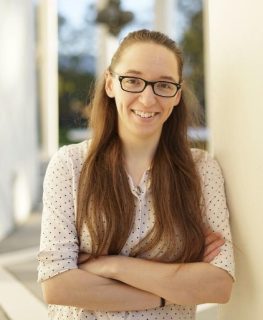
Skyler Ware is a freelance science writer covering physical and Earth sciences and an early-career fellow at The Open Notebook supported by the Burroughs Wellcome Fund. Her work has appeared in Eos, SciShow, Live Science, and others, and she was the 2023 AAAS Mass Media Fellow at Science News. Skyler has a PhD in chemistry from Caltech. Find her on Bluesky @skylerdware.bsky.social.